Running more tests is not the same as reducing release risk.
Introduction
Large SAP regression suites can consume time while still failing to explain which business processes are at risk. A better model links change impact to process priorities and then to the tests that create meaningful release evidence. SAP Cloud ALM and Tricentis capabilities can support complementary parts of that model.
Start From the Change, Not the Test Catalog
A release includes specific technical changes and business impacts. Identify the affected transactions, processes and dependencies before deciding what to test. This gives test selection an explicit reason and provides a basis for explaining what was not run.
Maintain a simple link from requirement or change to process scope and test outcome. Without that relationship, hundreds of completed test cases may still leave a business owner uncertain about readiness.
Use Impact Analysis to Prioritize
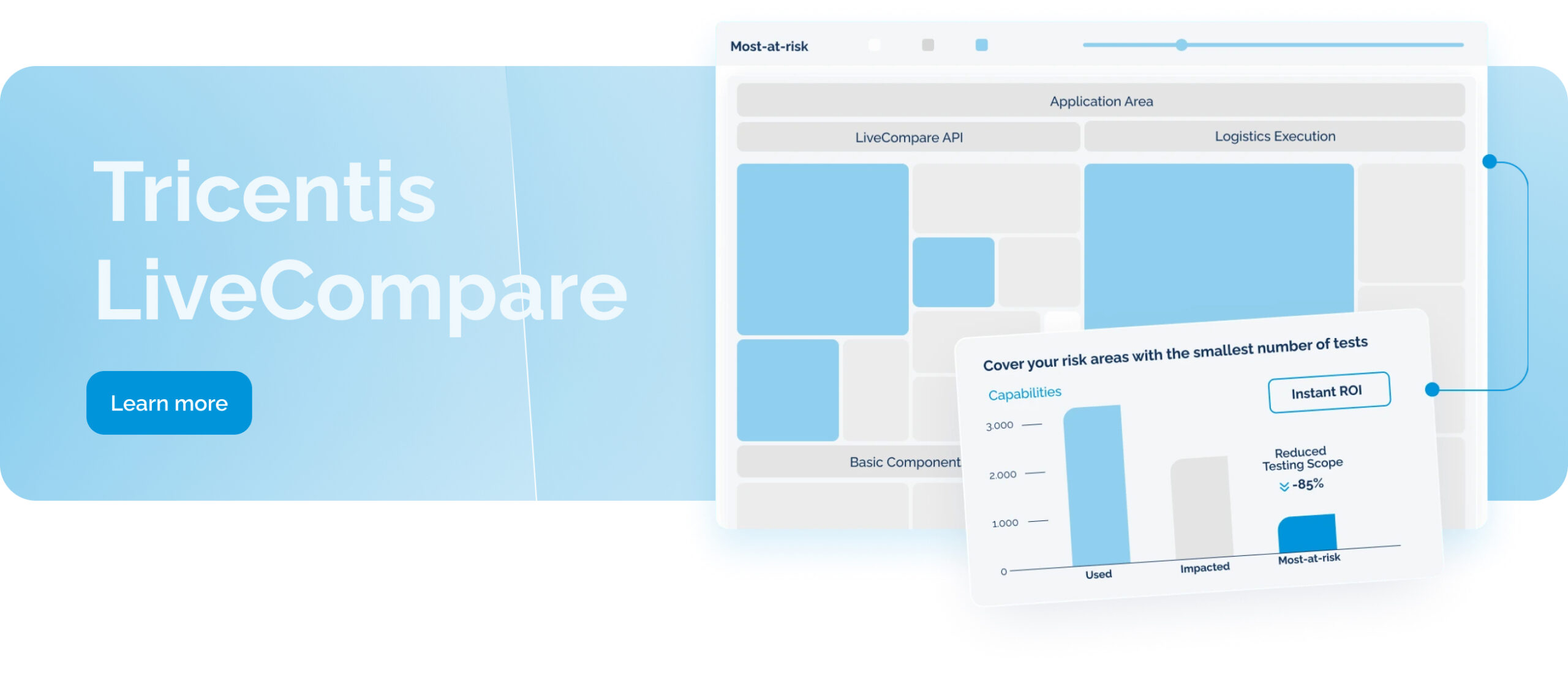
Tricentis LiveCompare supports SAP change impact analysis, while Tricentis Tosca supports automated tests. CoreALM offers Tricentis testing services that can complement SAP lifecycle activities.
The integration design should keep evidence attributable to the correct requirement and change. Avoid claiming that one tool automatically produces complete governance; the organization must define approval and exception rules.
Connect Results to SAP Lifecycle Decisions
In SAP Cloud ALM, track relevant implementation and testing context, including the work that requires validation. Teams can then determine whether high-risk tests passed, what defects remain and whether exceptions are accepted.
A useful release conversation is not “How many scripts passed?” It is “Did the highest-risk changed processes receive acceptable evidence?”
Make Test Optimization Repeatable
Use a small set of consistent risk attributes, such as business criticality, change size, dependency count and defect history, to guide each cycle. Compare the number of meaningful defects caught before production with test execution effort.
As the approach matures, refine the impact-to-test mapping and automate the most repeatable scenarios, keeping manual exploratory testing for areas that need human judgment.
How the Connected SAP ALM Model Fits Together
No matter which SAP Cloud ALM capability is being improved, a sustainable operating model must identify the responsibilities of the lifecycle platform, the enterprise tool and the SAP transport process. Not all three are required for every use case, but their boundaries should be explicit whenever they interact.
| Layer | Typical responsibility | Evidence to retain |
|---|---|---|
| SAP Cloud ALM | SAP lifecycle, process, requirements and testing context | Relevant business and SAP lifecycle evidence |
| Enterprise platform | Jira, Azure DevOps or ServiceNow as appropriate | Accountable work, change or ITSM record |
| SAP transport layer | Technical transport control and governance | Release, import and technical execution evidence |
For solution options, review CoreALM Tricentis services, SAP Cloud ALM services, SAP Clean Core resource hub. Each integration should be evaluated against the customer's actual requirements and supported product scope.
A Practical Five-Step Action Plan
- Identify the SAP objects and business processes touched by the release.
- Classify change impact and criticality.
- Select automated and manual tests based on risk.
- Link results and defects to lifecycle records.
- Retain documented acceptance of untested exceptions.
The right testing question is not whether the entire suite was executed, but whether the release received enough evidence for its risk.
Conclusion
Enterprises do not need to choose between a strong SAP lifecycle foundation and the enterprise platforms their teams already use. The more effective approach is to define process ownership, connect only the information needed for decisions and preserve release or operational evidence at the right control points.
This is the direction CoreALM supports through SAP Cloud ALM services and integrations, with transport management used where deeper SAP technical governance is required.
Explore the related CoreALM session: Test Optimization with Tricentis LiveCompare.
Build a Connected SAP Cloud ALM Operating Model
Discuss your architecture, integration requirements and SAP lifecycle priorities with CoreALM.
Frequently Asked Questions
Does Tricentis replace SAP Cloud ALM?
No. Tricentis tools support specialized testing and impact analysis, while SAP Cloud ALM provides lifecycle and SAP project context.
What is risk-based SAP test optimization?
It is the selection and prioritization of testing based on business criticality, technical change impact and known risk rather than executing every test indiscriminately.
Can automated tests support SAP release governance?
Yes. Test outcomes can contribute evidence, provided the organization defines how results, failures and exceptions affect the release decision.